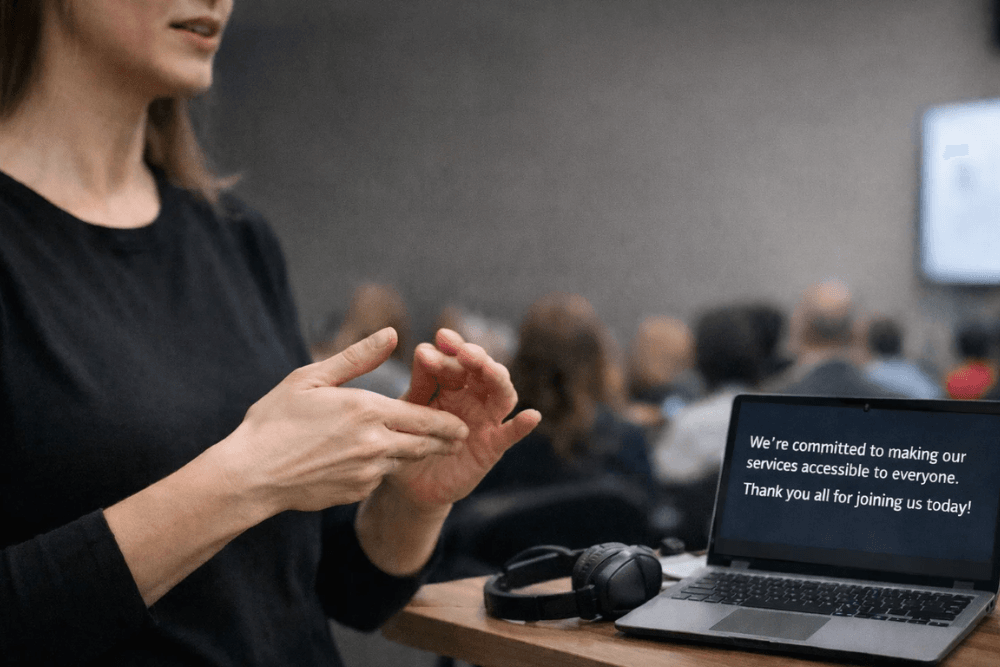
When access is planned well, Deaf and Hard of Hearing participants can fully engage. When it is rushed or treated as an afterthought, the gaps show fast.
If your team is planning meetings, events, or media, these five points make the biggest difference.
1. The right people matter more than speed
Access quality starts with the professionals providing it.
Qualified interpreters and captioners bring more than availability. They bring training, experience, and the ability to handle real-time communication without losing meaning.
Filling a request quickly does not guarantee clear access. Taking the time to match the right professionals to the work does.
2. Preparation changes the outcome
One of the most common mistakes teams make is skipping prep.
Sharing materials ahead of time helps interpreters and captioners deliver clearer, smoother access from the start. Even basic context helps.
This can include:
Agendas or run of show
Slides or scripts
Names, terms, and acronyms
A small amount of prep goes a long way.
3. Technology can support or block access
Platforms, audio quality, lighting, and camera placement all affect how access is received.
Before anything goes live, teams should confirm:
Audio is clear and consistent
Interpreters are fully visible on screen
Caption settings are enabled and tested
A backup plan exists if something fails
Strong access depends on both people and setup.
4. Quality is about clarity, not speed
Fast captions or rushed interpretation are not helpful if meaning is lost.
Good access focuses on:
Accuracy
Complete thoughts
Natural pacing that matches the speaker
The goal is understanding, not just keeping up.
5. Follow-up shows respect
Access does not end when the meeting or event ends.
Teams that take access seriously:
Ask for feedback from Deaf participants
Review what worked and what did not
Make changes for next time
This step builds trust and leads to better experiences over time.