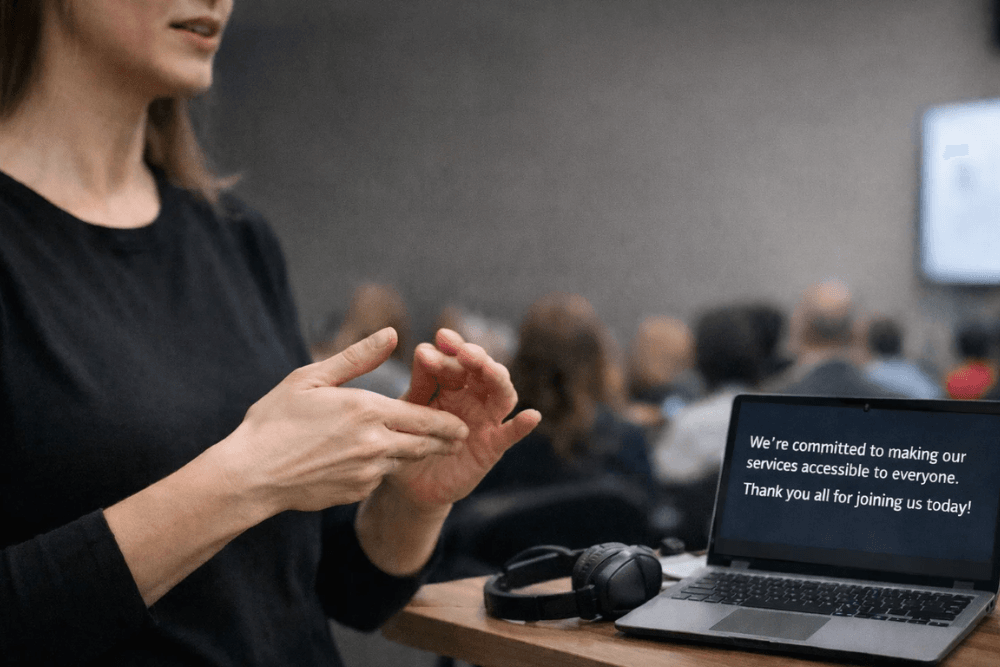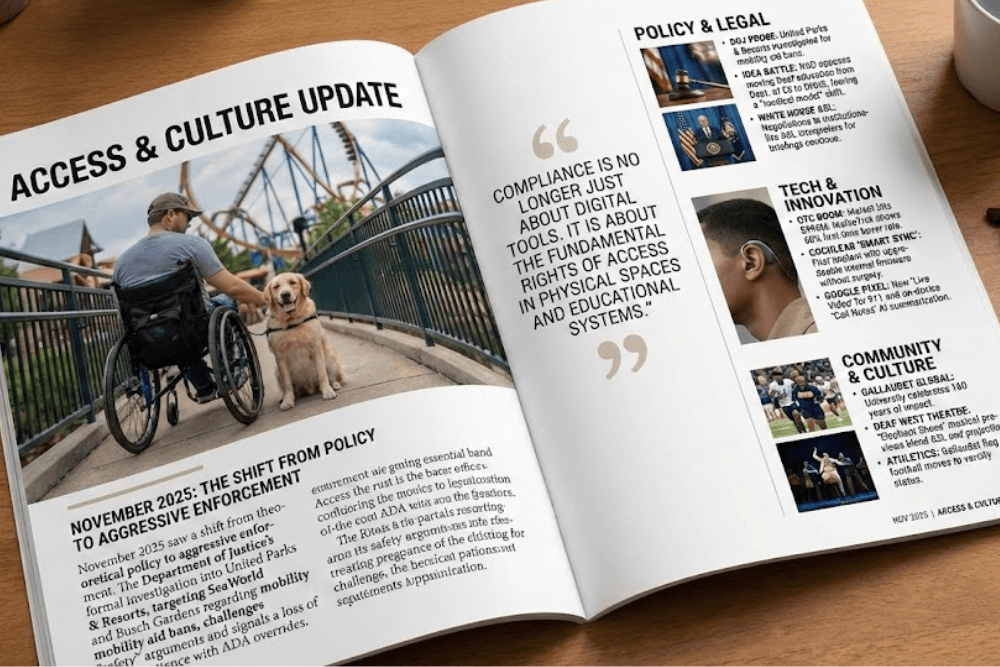

Navigating the Americans with Disabilities Act (ADA) can feel overwhelming for business owners, healthcare administrators, and educators. Yet ensuring communication access for the Deaf community through professional American Sign Language (ASL) interpreting is both a legal requirement and a commitment to equity and inclusion.
At Partners Interpreting we help organizations meet these obligations. This blog post breaks down the essentials of ADA compliance for ASL interpreting, offering clear insights for those exploring how to provide effective communication.
What Is ADA Compliance for ASL Interpreting?
The ADA, which was enacted in 1990, prohibits discrimination against individuals with disabilities, including those who are Deaf or hard of hearing. It mandates that organizations provide effective communication through auxiliary aids, such as qualified ASL interpreters, to ensure equal access in employment, public services, and private businesses.
Understanding the legal framework and practical steps help your organization avoid costly penalties while fostering inclusivity.
The Legal Framework
The ADA’s requirements for communication access are outlined in three key titles:
Title I (Employment): Employers with 15 or more employees must provide reasonable accommodations, like ASL interpreters, for job interviews, training, or meetings. This ensures Deaf employees can perform essential job functions.
Title II (State and Local Government): Public entities, such as municipal offices or public schools, must ensure effective communication for their services and programs. They must give primary consideration to the individual’s preferred aid, like an ASL interpreter.
Title III (Public Accommodations): Private businesses, such as restaurants or hospitals, must provide communication access to serve the public equally, with no size exemption.
Failing to comply can lead to lawsuits, Department of Justice (DOJ) complaints, or fines ranging from $15,000 to over $350,000, as seen in recent enforcement actions.
What Does Effective Communication Mean?
The DOJ defines effective communication as ensuring that individuals with disabilities can interact as effectively as those without disabilities. For Deaf individuals, this often means providing a qualified ASL interpreter, especially for complex or critical interactions.
Simple Interactions: Brief exchanges, like asking about a product in a store, may be handled with written notes or gestures.
Complex Interactions: Medical consultations, legal proceedings, or academic lectures typically require ASL interpreters to convey nuanced information accurately. For example, relying on written notes for a surgical consultation is ineffective, as it limits interaction and clarity.
The choice of aid depends on the communication’s context, length, and complexity, with Title II entities prioritizing the individual’s preference.
Who Is a Qualified Interpreter?
A qualified interpreter, as defined by the ADA, must interpret accurately, impartially, and with specialized vocabulary for the setting, such as medical or legal terminology. They don’t need certification, but professional training, like that from the Registry of Interpreters for the Deaf (RID), ensures competence. Family members or untrained staff are rarely qualified due to bias or lack of expertise, this can lead to miscommunication, legal violations and conflicts of interest.
Industry-Specific Requirements
ADA requirements vary by industry, reflecting the stakes of communication:
Healthcare: Accurate communication is critical for diagnoses, treatment plans, and informed consent. ASL interpreters are often required for complex medical discussions, and Video Remote Interpreting (VRI) must meet strict standards, like high-quality video and audio.
Legal Settings: Courts must provide interpreters for trials, hearings, or attorney-client meetings to protect constitutional rights. VRI is limited to simple, uncontested matters.
Education: Schools and universities must ensure Deaf students and parents can access lectures, meetings, and extracurricular activities. This may involve interpreters or real-time captioning (CART), tailored to the setting.
Common Pitfalls to Avoid
Organizations often stumble due to misconceptions about ADA requirements:
Using Unqualified Interpreters: Relying on family members or untrained staff risks inaccurate communication and legal violations.
Assuming Written Notes Suffice: Written communication may work for simple exchanges but fails for complex discussions, especially for those who primarily use ASL.
Charging for Interpreters: The ADA prohibits passing costs to individuals. Interpreter expenses are an operational cost, with tax credits available for small businesses.
Waiting for Requests: Businesses must proactively offer accommodations, as Deaf individuals may avoid places that don’t advertise accessibility.
Poor VRI Implementation: VRI must have clear video, reliable connections, and trained staff. It’s ineffective for complex or sensitive situations, like active labor or legal proceedings.
Non-compliance can result in DOJ settlements, monetary damages, or policy overhauls, as seen in cases where hospitals failed to provide interpreters.
Why Partner with a Professional Interpreting Agency?
Working with a professional agency like Partners Interpreting simplifies compliance and enhances service quality. We offer:
- Qualified Interpreters: Access to RID-certified professionals with specialized skills for medical, legal, or educational settings
- 24/7 Availability: Immediate support for emergencies and flexible scheduling for planned events
- Compliance Assurance: We ensure interpreters meet ADA standards, reducing legal risks
- Streamlined Logistics: Handling scheduling and documentation frees organizations to focus on their core functions
Partnering with us mitigates risks and ensures Deaf individuals receive equitable access, aligning with the ADA’s spirit of inclusion.
Next Steps for Your Organization
To start your journey toward ADA compliance, consider these actionable steps:
- Create Policies: Develop clear procedures for requesting and providing ASL interpreters
- Train Staff: Educate employees on ADA requirements and how to work with interpreters
- Engage with Individuals: Ask Deaf clients or employees about their preferred communication methods
- Partner with Experts: Collaborate with Partners Interpreting to access qualified interpreters and ensure compliance
- Budget for Accessibility: Treat interpreter costs as operational expenses and explore tax credits
We’ll be happy to walk you through any of these steps if you need more information.
By prioritizing effective communication, your organization not only meets legal obligations but also builds an inclusive environment. Ready to take the next step? Contact Partners Interpreting to learn how we can support your ADA compliance needs.